The Science-Fiction Story That Waited Ten Years for Me
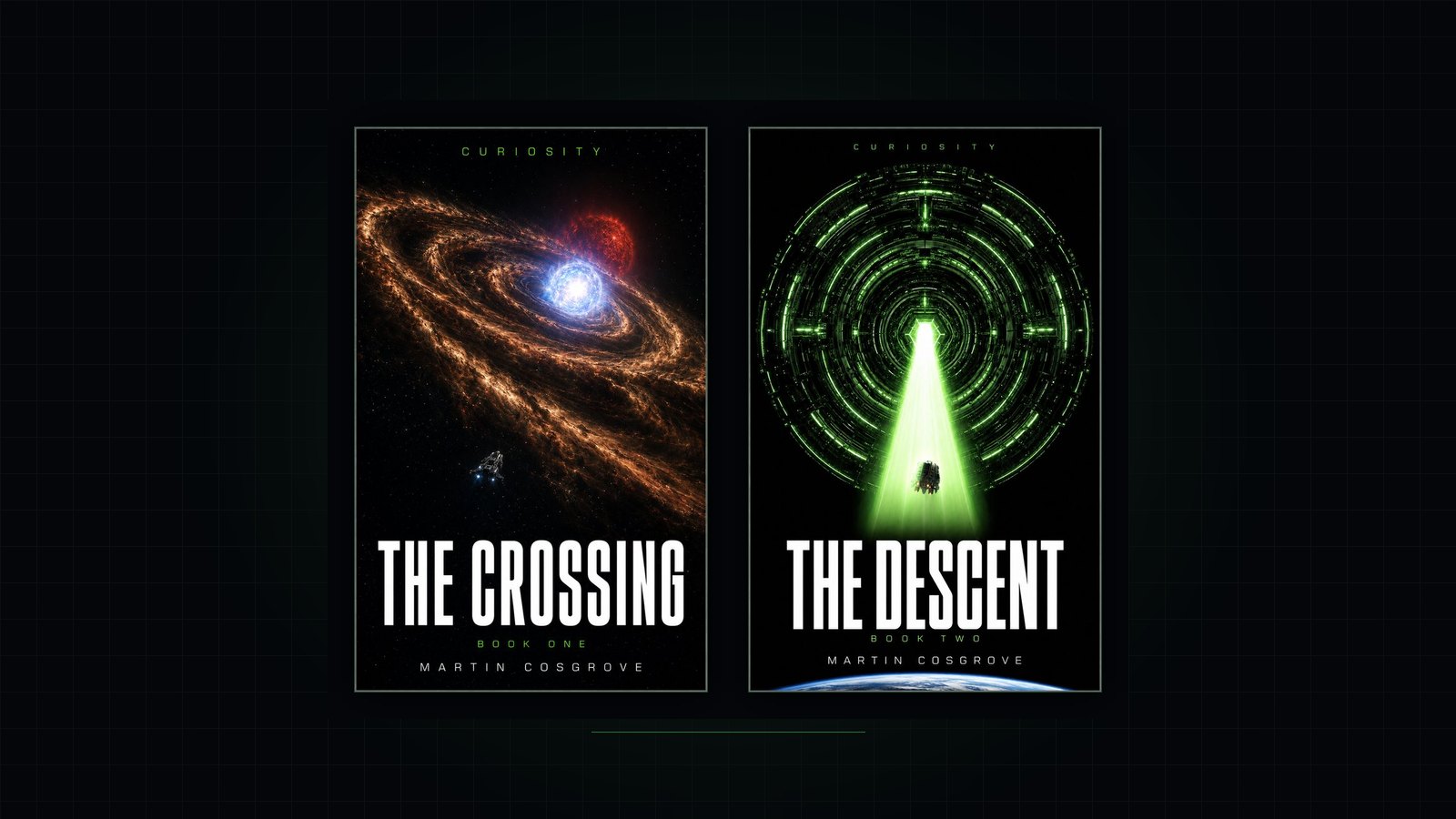
Some stories arrive in a rush. Others wait.
I began writing Curiosity around eleven years ago. For the best part of a year, I lived inside it. I wrote roughly ninety per cent of what I thought would be a single novel: a deep-space expedition, an impossible signal, a small research vessel and six people travelling farther from Earth than anyone had ever gone.
Then life intervened.
There was no dramatic declaration that I was abandoning the book. Work became demanding. Relationships and family needed my attention. Days became months, and months quietly became years. The manuscript remained on my computer: too alive to delete, too unfinished to share and, for a long time, too complicated to face.
Nearly a decade passed before I properly opened it again.
I expected to find the literary equivalent of an old photograph: something meaningful to the person I had been, but no longer quite connected to the person I had become. Instead, I found that the signal at the centre of the story was still transmitting.
I wanted to know who had sent it. I wanted to know whether the crew would survive the journey. Most of all, I wanted to finish what I had started.
The kind of science fiction I have always loved
I grew up on 1990s Star Trek, and its influence on me runs deeper than starships and alien worlds. What held my attention was the idea of a small group of capable people, each with a different area of expertise, facing a problem that could not be solved by one person alone.
The best episodes were rarely just about defeating an enemy. They were about trying to understand something genuinely unfamiliar. They asked questions about identity, duty, consciousness, prejudice, survival and the limits of human certainty. The technology created the situation, but the people made it matter.
That is the tradition in which I wanted to write Curiosity.
My other great science-fiction touchstones include Arthur C. Clarke and Ray Bradbury: writers with very different sensibilities, but both capable of making the universe feel enormous and the individual human life within it feel precious. I wanted astronomical scale without losing the intimacy of a few people trapped together in a confined space. I wanted ideas that were large enough to be unsettling, but characters human enough to carry them.
A message from eight thousand light years away
Curiosity begins with a signal.
Eight thousand light years from Earth, a dying star has been transmitting for two hundred years. Nobody has answered.
The star is WR 104, a real Wolf–Rayet binary in Sagittarius. It is surrounded by an extraordinary spiral of glowing dust and has sometimes been discussed as a possible gamma-ray-burst candidate.
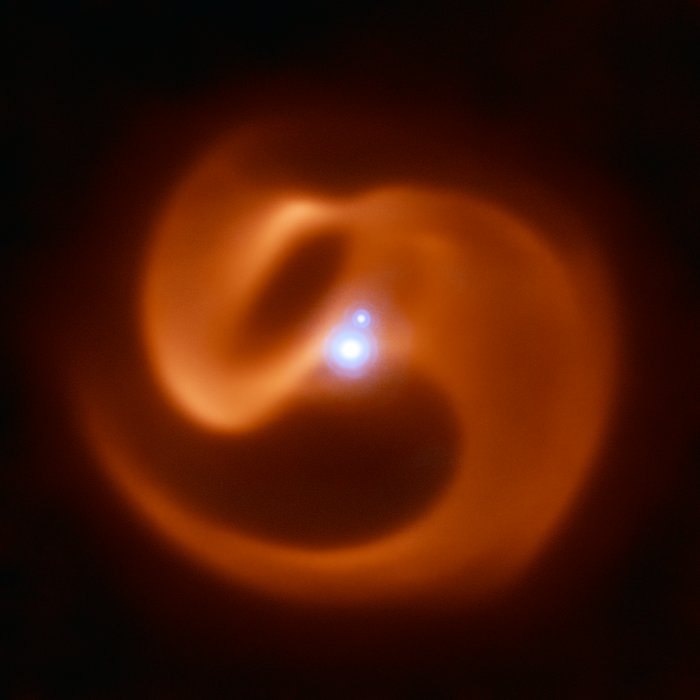
In the first book, Curiosity: The Crossing, former commander Jennifer Starzek is given a mission she has every reason to refuse. She must take a twenty-five-year-old research vessel to WR 104 and discover who is calling.
Her ship is only eighty-five metres long. Her crew consists of six people, none of whom would have been anybody’s first choice. They have fifty-three days to cross eight thousand light years. Behind them, the outpost they left begins to fall apart. Ahead of them is an intelligence that has been waiting for a very long time.
And when the Curiosity finally arrives, it does not ask to speak to humanity.
It asks for one member of the crew by name.
First contact without the invasion fleet
I love first-contact fiction, but I did not want to write another story in which alien ships appear over major cities and humanity responds with missiles.
The intelligence at WR 104 has already formed an opinion of our species before the crew arrives. The central problem is not combat or diplomacy. It is comprehension. How do you communicate with something whose motives, values and perception of time may be radically unlike your own? What happens when humans assume that a warning is a threat, or that silence means nobody is listening?
Those questions lead into the second book, Curiosity: The Descent, which begins immediately after The Crossing. The crew must enter an alien structure the size of a world and discover what is inside, why it has been waiting at WR 104, and what it is aimed at.
The books sit somewhere between hard science fiction and space opera. The astronomy and engineering matter; they are part of the machinery of the plot, not decorations hung in the background. But nobody has to complete a physics course before turning the page. Character, tension and momentum always come first.
Why one novel became two
When I returned to the manuscript, I finally admitted that I had not written one large novel. I had written two distinct movements of the same story.
The Crossing is about the journey: the formation of the crew, the pressures of isolation and the growing realisation that the mission is not what any of them believed it to be. The Descent is about the encounter itself and its consequences. One looks outward towards the unknown; the other goes inside it.
Separating them gave both halves room to breathe. Together they form one complete story of about 169,000 words, and I published both books at the same time. If you reach the end of The Crossing, you do not have to spend a year waiting to find out what happens next. The Descent is already there.
That mattered to me. I had already made this story wait for ten years. I did not want to make its readers wait as well.
Finishing the book changed its meaning
Returning to an old manuscript is a strange collaboration with your younger self.
There were choices I admired, choices I questioned and whole passages that seemed to have been written by a familiar stranger. The person who began Curiosity was fascinated by the scale of its mystery. The person who finished it was more interested in what people carry with them into that mystery: grief, guilt, loyalty, fear and the hope that past failure does not have to determine what happens next.
For twenty-two years, my working life has been spent as a secondary-school teacher. Writing has had to exist around marking, planning, deadlines and all the ordinary demands of adulthood. Perhaps that is why the crew of the Curiosity became so important to me. They are not superheroes or chosen ones. They are professionals, damaged in different ways, trying to do difficult work well while carrying private lives that do not stop mattering simply because the universe has presented them with something extraordinary.
Finishing these books reminded me that a project can go quiet without being dead. Sometimes the story is still there, waiting for you to become the person capable of completing it.
The signal is finally out there
If you enjoy first-contact stories built around mystery rather than invasion, small crews under pressure, real astronomy, ancient alien structures and moral questions without simple answers, I wrote Curiosity for readers like you.
Curiosity: The Crossing and Curiosity: The Descent are both available now. You can also read the opening chapter of The Crossing free on the website before deciding whether to come aboard.
After ten years of silence, the signal is finally transmitting.
I hope you answer it.
Martin Cosgrove is a science-fiction and fantasy author from Merseyside, England. He is also the author of the Universal Matter novels The Destiny of Ethan King and KARA. Visit curiositynovels.com to explore the books and read Chapter One.
This piece first appeared in Life 2.0 on Medium on 15 August 2026.